Back to Projects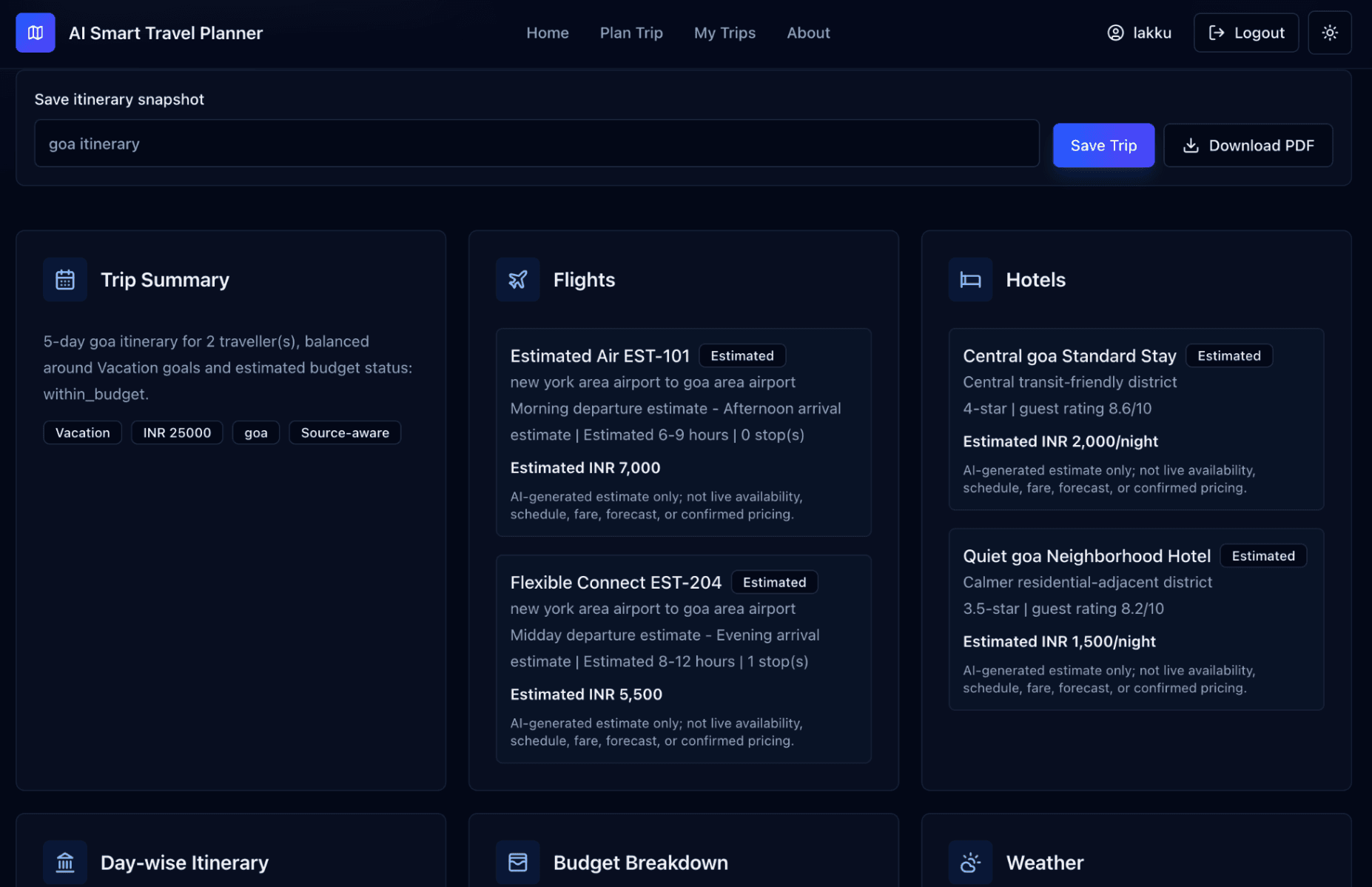
Generated itinerary dashboard 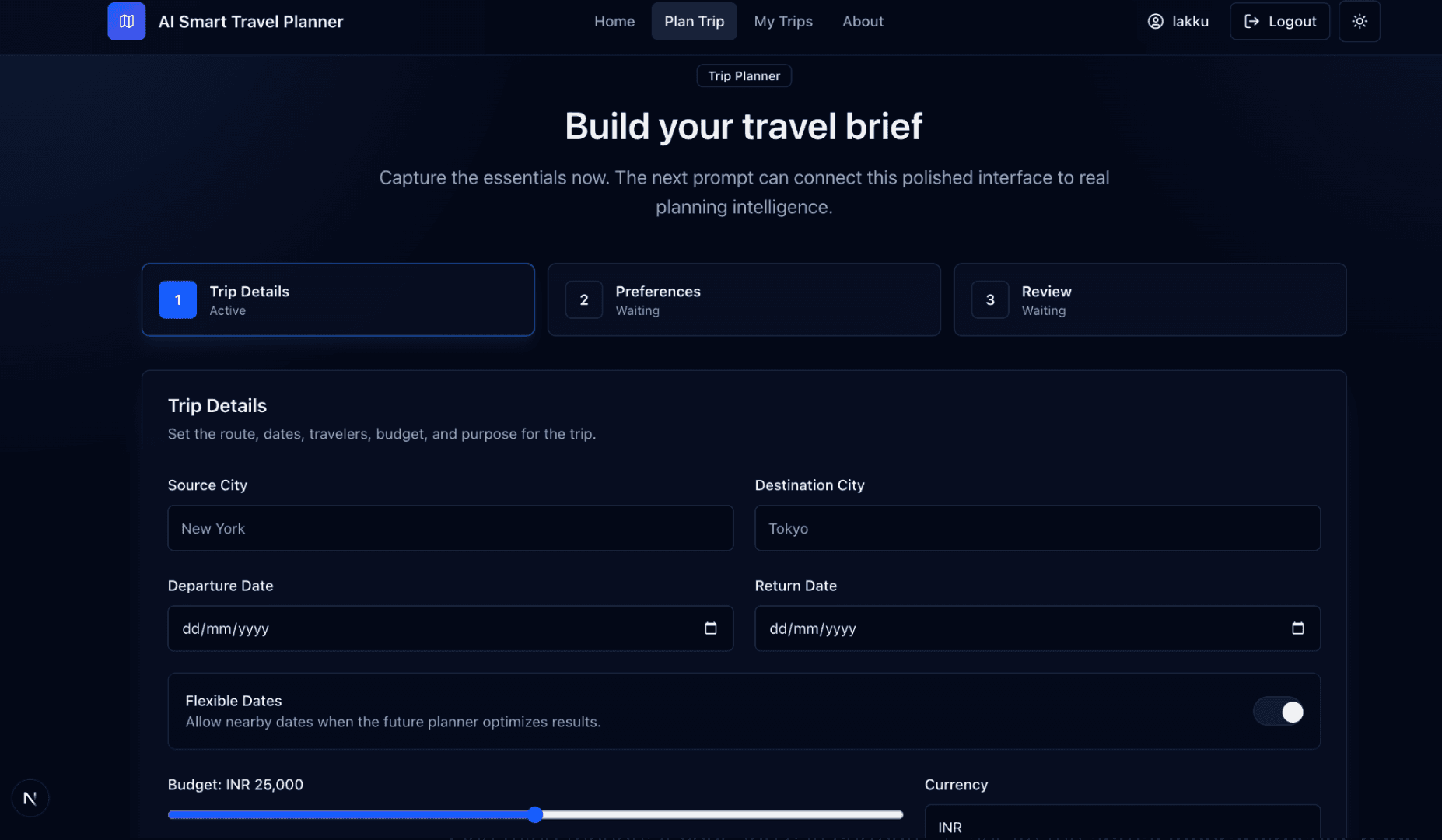
Trip planning workflow
Full-Stack AI ApplicationFeatured / Flagship
AI Smart Travel Planner
A full-stack travel planning application designed to generate personalized trip itineraries through a multi-agent workflow.
- Next.js
- React
- TypeScript
- FastAPI
- Python
- PostgreSQL
- SQLAlchemy
- LangGraph
Interface Preview
Overview
A full-stack travel planning application designed to generate personalized trip itineraries through a multi-agent workflow.
The Problem
Trip planning usually requires users to search across multiple sources for destinations, accommodations, activities, weather, restaurants, transport, budgets, and packing requirements.
The Solution
A unified application that collects trip preferences and coordinates specialized planning agents to create a structured itinerary.
Key Features
- Multi-step trip planning flow
- LangGraph-based multi-agent workflow
- Flight, hotel, activity, weather, restaurant, transport, budget, packing, and itinerary agents
- FastAPI backend
- Next.js frontend
- PostgreSQL persistence
- JWT authentication
- Saved trips
- Shareable itineraries
- PDF export
- Optional live-data provider integrations
- Fallback itinerary generation when AI/live integrations are disabled
Technology / Architecture
- Next.js
- React
- TypeScript
- FastAPI
- Python
- PostgreSQL
- SQLAlchemy
- LangGraph
- LangChain
- OpenAI
- Tailwind CSS
- 1Next.js frontend
- 2FastAPI API
- 3Trip service / agent workflow
- 4LangGraph agents
- 5PostgreSQL + optional external APIs
Challenges & Learnings
Challenges
- Keeping a multi-step planning flow understandable while coordinating several specialized agents.
- Designing fallback behavior so itinerary generation remains usable when optional AI or live-data integrations are disabled.
Learnings
- Clear orchestration boundaries make agent workflows easier to test, debug, and extend.
- Travel planning benefits from structured outputs that users can save, share, and export.